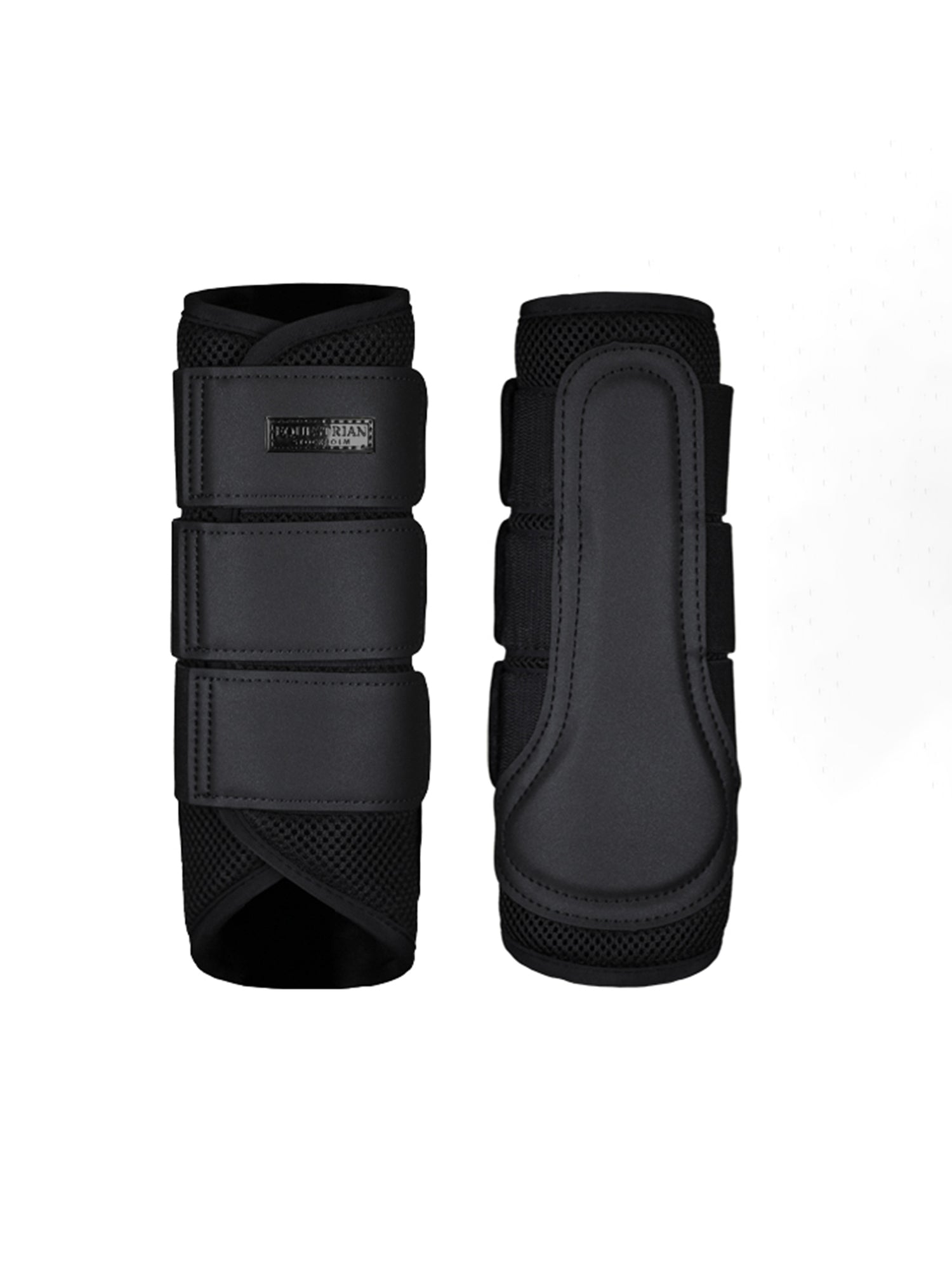
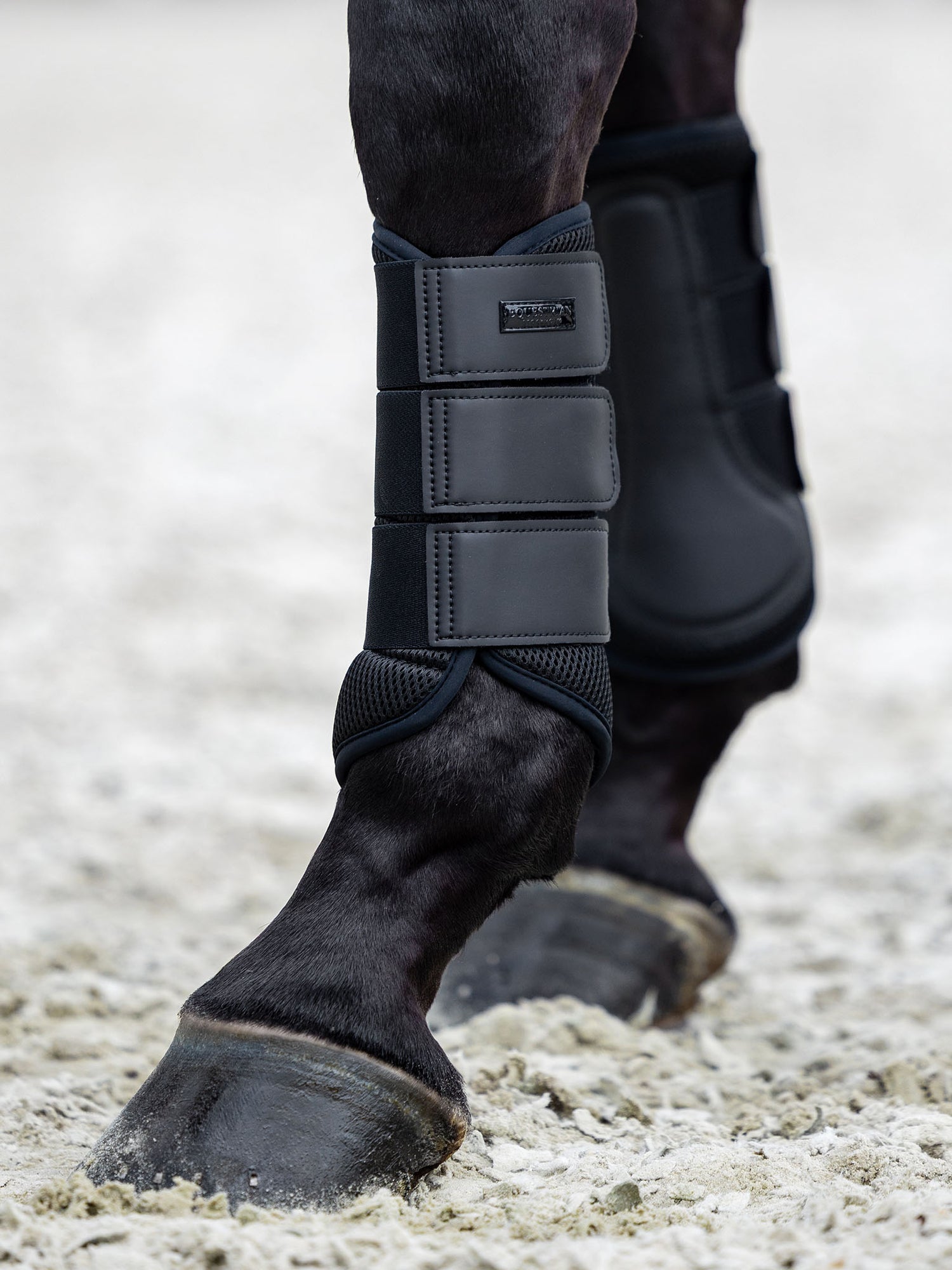
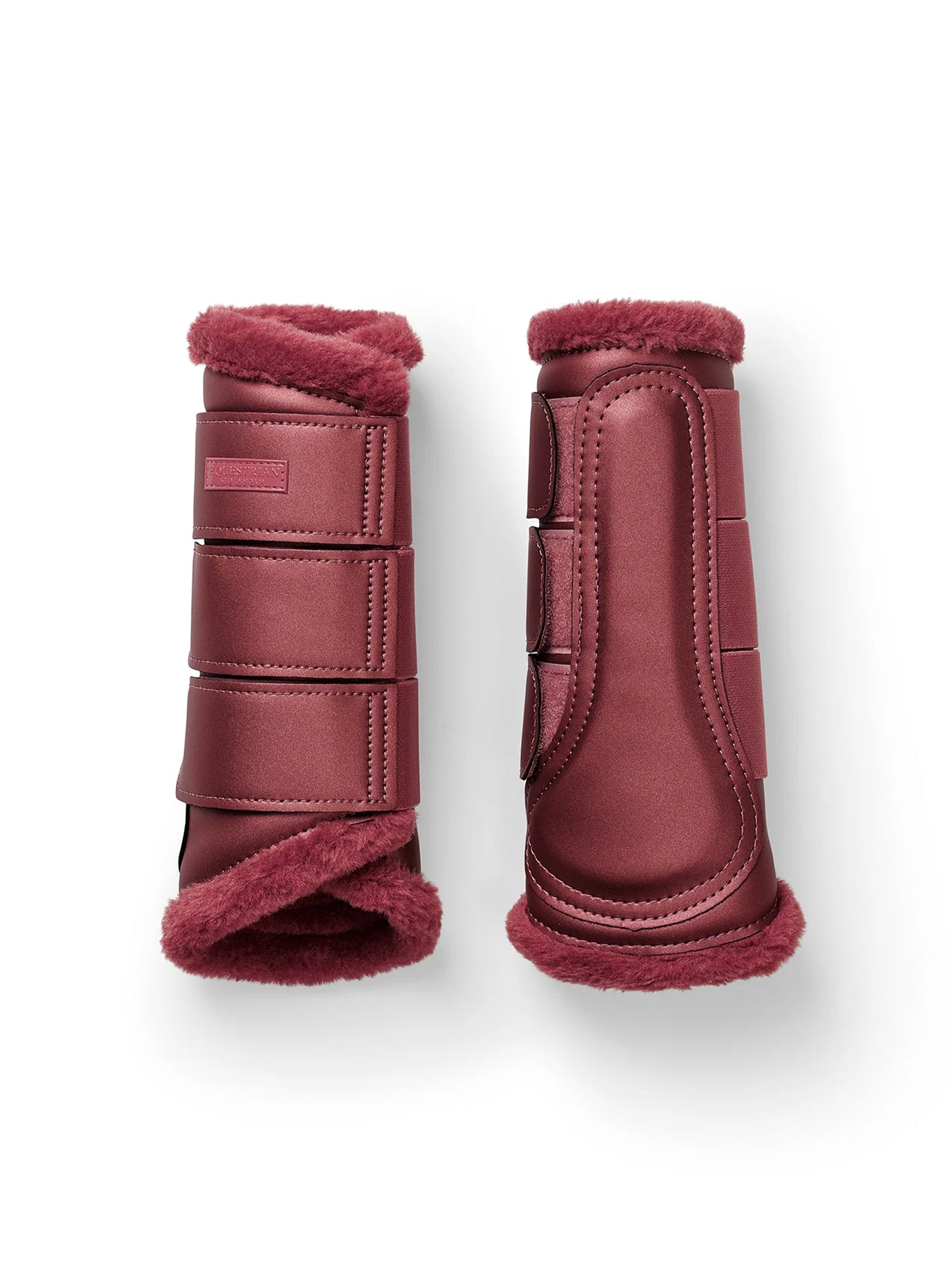
Horse boots are a form of protection used on the horse’s legs to protect against impact, bruises, terrain, etc. There are different types of leg protection in various materials and designs, created for different purposes such as riding, transport, or use in the paddock.
See our assortment of horse boots here: Horse Boots
We will list the most common horse boots below.
Brushing boots:
The most common type of protection. Brushing boots are used to prevent damage to the horse's tendons and fetlock from blows from rails, terrain, or from the horse’s own legs hitting each other. They are lined with a soft, shock-absorbing material and often have a reinforced interior to help absorb impact. There are several variations, including tendon boots and fetlock boots.
Brushing boots are commonly used when jumping, but also for groundwork and dressage to protect the horse’s legs. They are durable, easy to put on and take off, and easy to clean.
Bell boots:
Bell boots are attached around the horse's ankle and protect the hooves and hoof walls.
They are mainly used to prevent trampling or damage to the hoof and coronet band.
They can be used both when riding, in the paddock, and in the stable.
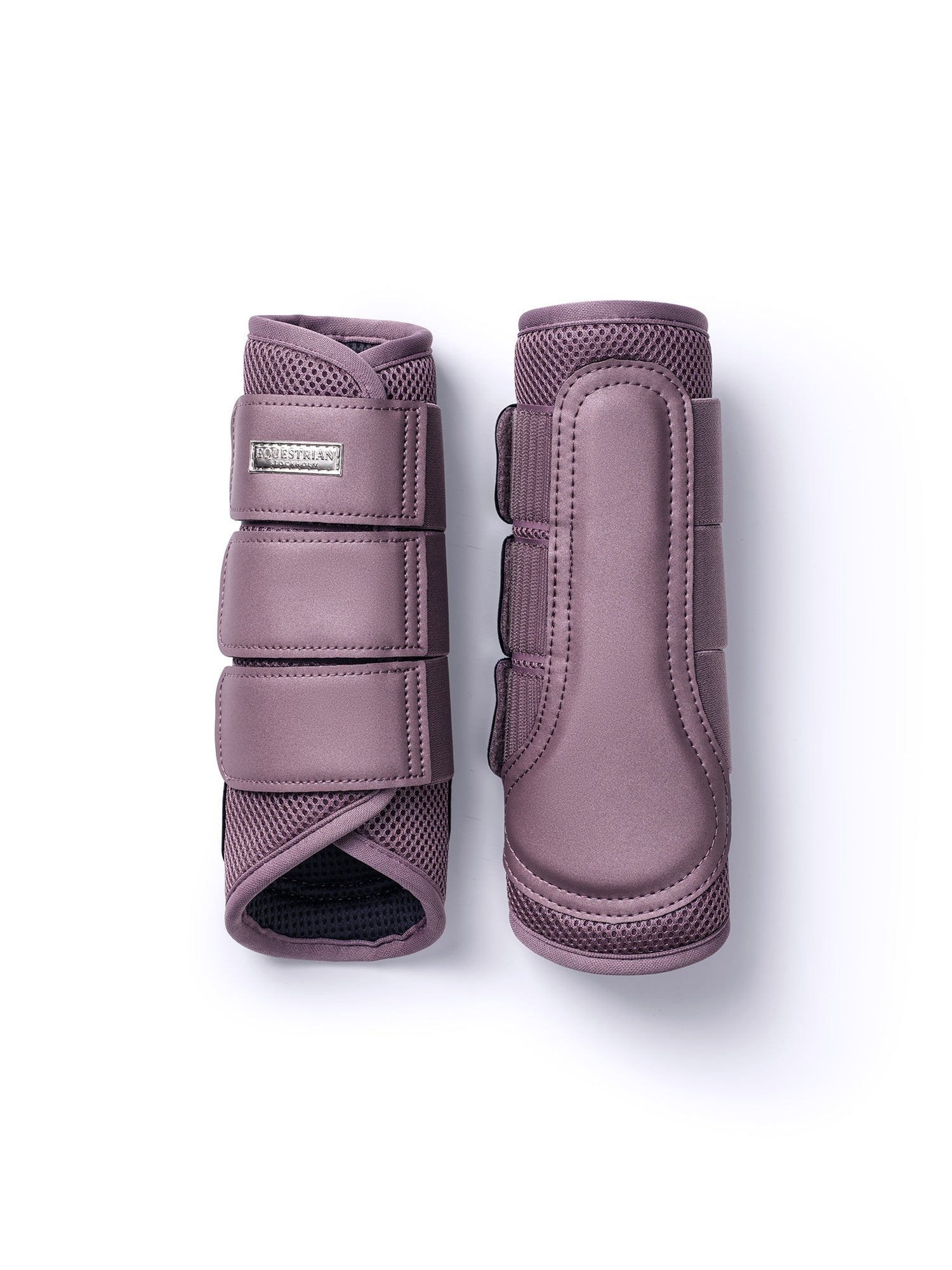
Mesh boots:
Mesh boots are our newest addition in our wide selection of boots.
They are a lightweight option designed for maximum comfort.
The breathable mesh construction allows your horse unrestricted movement. They are a perfect choice for riding in warmer weather when you want a lighter and more breathable protection.
Leg protectors:
Leg protectors are a softer type of protection, mainly used in dressage.
They are a good alternative to polo wraps or brushing boots. They often cover the entire leg and fetlock and are fastened with Velcro straps. They provide protection against impact while allowing comfort and flexibility during riding.
Travel boots:
Travel boots are used during transportation to protect the horse’s legs from impact and the hooves from trampling when loading and during travel.
Travel bandages:
Travel bandages are used together with a thicker bandage pad to protect the legs during transport. They should be wrapped from just below the knee or hock down to the coronet band.
Travel boots or travel bandages – how do I choose?
Different types of travel protection are chosen depending on how your horse behaves during transport, whether the horse has shoes, or if it wears studs. Travel boots are more robust and should cover from above the knee and hock down to the coronet band. They should fit securely to avoid slipping. Some horses may find them bulky. In that case, travel bandages can be a better option.
Tip: Train your horse to wear travel boots separately from transport to get used to the feeling.
Can you use studs during transport?
If the horse wears studs, it is especially important to use protection that covers the hooves to reduce the risk of injury. Larger studs used for jumping should never be used during transport.