






What color suits your horse best?
PINTO HORSE
Pinto horses look stunning in colors that complement the unique contrast of their coat. Black Pintos shine in bold, vibrant shades like turquoise, emerald green, raspberry pink, and bright violet, creating a striking and modern look that enhances their dramatic markings. Chestnut and Bay Pintos, on the other hand, are beautifully complemented by cooler tones such as dusty blue, steel grey, sage green, lavender, and deep navy. These shades balance the warmth of their coat while highlighting their distinctive pattern with timeless elegance. Whether for training, competitions, or photoshoots, the right colors can truly emphasize the beauty, character, and individuality of every Pinto horse.


Dressage Saddle Pad Pearl


Dressage Saddle Pad Modern


Dressage Saddle Pad Modern


Jump Saddle Pad


Dressage Saddle Pad


Dressage Saddle Pad Line


Dressage Saddle Pad


Jump Saddle Pad Modern
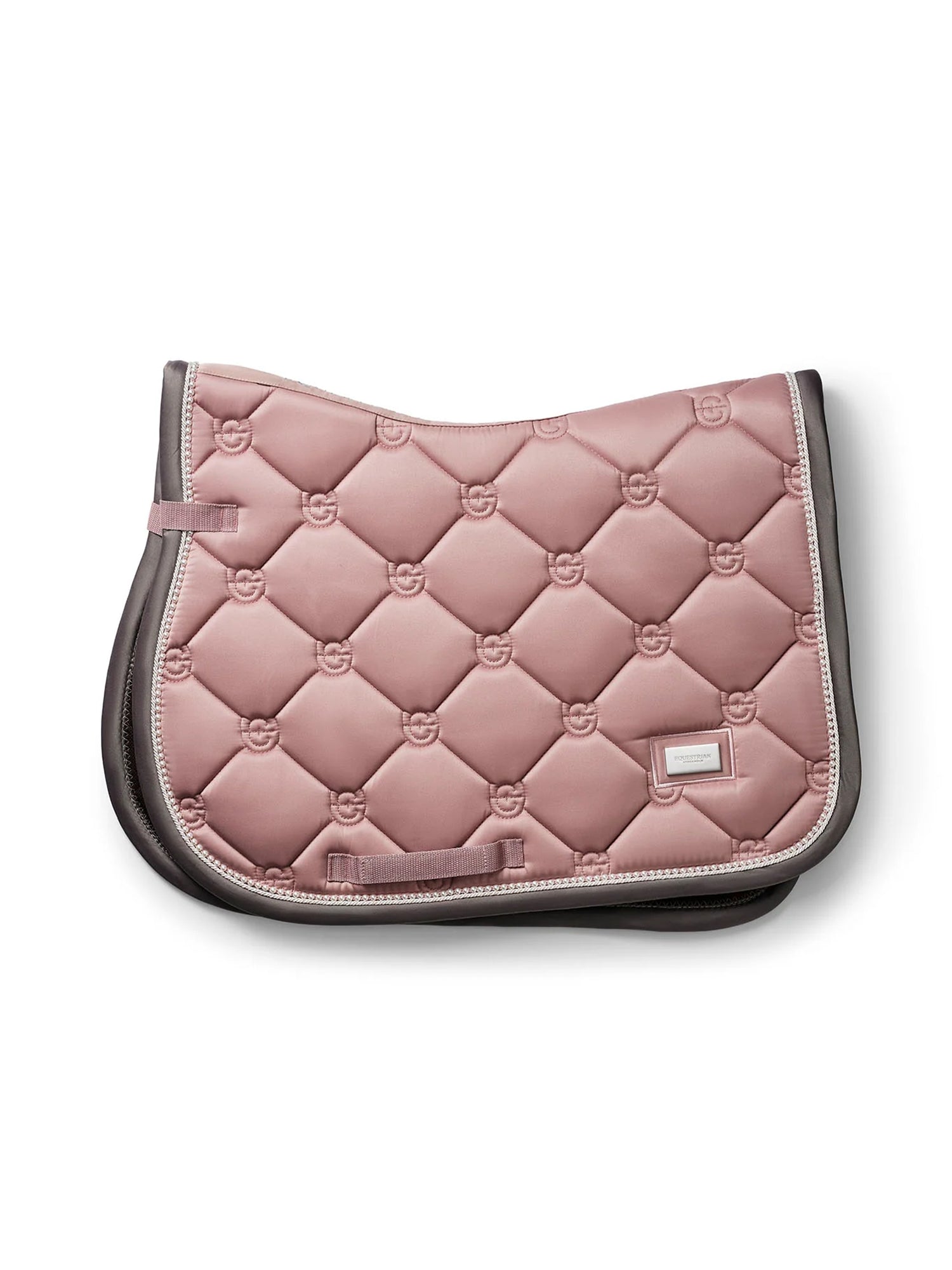


Dressage Saddle Pad Line


Dressage Saddle Pad Modern


Dressage Saddle Pad Line


Jump Saddle Pad Line


Dressage Saddle Pad
Dressage Saddle Pad Modern


Dressage Saddle Pad
Pinto Horse: Colors, Patterns, Characteristics & Complete Guide
With their striking coat patterns and unique combinations of colors, Pinto horses are among the most recognizable horses in the equestrian world. From bold black-and-white markings to beautiful chestnut-and-white coats, every Pinto horse has its own distinctive appearance.
But what exactly is a Pinto horse? Is it a breed, a color, or both? And what makes a Pinto different from an American Paint Horse?
In this complete guide, we explore Pinto horse colors, coat patterns, genetics, characteristics, and care. We'll also share our favorite styling tips to help you find the perfect colors for your Pinto horse.
What Is a Pinto Horse?
A Pinto horse is a horse with a distinctive coat pattern featuring large patches of white combined with another coat color, such as black, bay, chestnut, or brown.
Contrary to popular belief, Pinto is not a single horse breed. The term describes a coat color pattern that can appear in many different horse breeds.
Pinto horses are particularly recognizable because of their contrasting markings. Some have large, rounded white patches, while others feature irregular markings that appear to splash across their bodies.
The word "Pinto" comes from Spanish and is associated with a painted or spotted appearance.
Pinto horses can vary considerably in height, body type, temperament, and athletic ability depending on their breeding. Their striking appearance, however, makes them instantly recognizable.
Pinto Horse Colors: The Most Common Combinations
One of the most fascinating characteristics of Pinto horses is the variety of coat colors they can display.
The white markings of a Pinto can appear over several different base coat colors, creating beautiful and often dramatic contrasts.
Black and White Pinto Horse
Black and white Pinto horses are among the most visually striking color combinations.
Their dark base coat contrasts sharply with large white patches, creating a bold and elegant appearance.
In British equestrian terminology, a black and white Pinto horse is commonly called a piebald horse.
Black and white Pintos look particularly beautiful in vibrant saddle pad colors such as emerald green, turquoise, royal blue, and deep purple.
Brown and White Pinto Horse
Brown and white Pinto horses feature rich brown coats combined with distinctive white markings.
Depending on their underlying coat genetics, these horses may be bay, dark brown, or another brown-toned color.
Their warm coloring creates a beautiful contrast with cooler accessories, including navy blue, dusty blue, and sage green.
Chestnut and White Pinto Horse
Chestnut and white Pinto horses combine reddish-brown coloring with bright white markings.
The contrast between warm chestnut tones and white patches creates a particularly eye-catching appearance.
Colors such as navy blue, forest green, lavender, and soft blue can beautifully complement a chestnut Pinto.
Bay Pinto Horse
A bay Pinto horse has a bay base coat, typically characterized by a reddish-brown body and black points, combined with white patches.
The combination of black, brown, and white can give bay Pintos a particularly rich and distinctive appearance.
Elegant colors such as dark green, midnight blue, and muted pink can work beautifully with their coats.
Pinto Horse Patterns: Tobiano, Overo and Tovero
Although all Pinto horses share distinctive white markings, the distribution and appearance of these markings can vary considerably.
The most widely recognized Pinto coat pattern classifications include Tobiano, Overo, and Tovero.
1. Tobiano Pinto Horse
The Tobiano pattern is one of the most recognizable Pinto horse patterns.
Typical Tobiano characteristics include:
- Large, rounded white patches with relatively smooth edges.
- White markings that often cross the horse's back.
- White legs, particularly below the knees and hocks.
- A head that may have relatively ordinary facial markings.
- A mane or tail that may contain more than one color.
Tobiano horses can be predominantly white or predominantly dark.
The Tobiano pattern is inherited through a dominant genetic variant, meaning a horse generally needs a parent carrying the Tobiano pattern to inherit it.
2. Overo Pinto Horse
Overo is a broad term used to describe several white-spotting patterns other than Tobiano.
Overo Pintos often have irregular white markings that spread across the sides of the body.
Common characteristics include:
- Irregular or jagged white patches.
- White markings that often do not cross the back.
- Dark-colored legs in many horses.
- Extensive white facial markings.
- Blue eyes in some individuals.
Not every Overo horse looks the same. Frame Overo, Splashed White, and Sabino patterns can produce noticeably different appearances.
3. Tovero Pinto Horse
A Tovero horse carries the Tobiano pattern together with one or more Overo-associated patterns.
These horses may display characteristics of both pattern groups.
Common features can include:
- Extensive white markings across the body.
- Dark pigmentation around the ears or eyes.
- White facial markings.
- One or two blue eyes.
- Dark spots on the chest, flanks, or around the tail.
Because multiple coat-pattern genes can interact, Tovero horses can display a wide range of appearances.
Pinto Horse vs. Paint Horse: What's the Difference?
One of the most frequently asked questions is whether a Pinto horse and a Paint Horse are the same.
Although the terms are often confused, there is an important distinction.
Pinto describes a coat pattern, while American Paint Horse refers to a specific registered horse breed.
The American Paint Horse has defined pedigree and registration requirements associated with Paint, Quarter Horse, and Thoroughbred bloodlines.
Pinto coloring, on the other hand, can appear in many different breeds.
For example, a horse with Pinto markings might be an American Paint Horse, a pony, or another breed carrying white-spotting genetics.
An American Paint Horse can also have a predominantly solid-colored coat.
In simple terms:
- Pinto Horse: Describes a distinctive white-spotted coat pattern.
- American Paint Horse: A registered breed with specific pedigree requirements.
- Can a Paint Horse be a Pinto? Yes, many Paint Horses display Pinto coloring.
- Can a Pinto be a Paint Horse? Yes, but only if it meets the relevant breed registration requirements.
Understanding this distinction helps horse owners and enthusiasts identify horses more accurately.
Pinto Horse Characteristics and Temperament
Pinto horses are often admired for their beauty, but their appearance alone does not determine their personality or athletic abilities.
Because Pinto describes a coat pattern rather than a specific breed, temperament can vary considerably.
Some Pinto horses are calm and suitable for recreational riding, while others are energetic, athletic horses suited to competitive disciplines.
Their characteristics depend on factors such as:
- Breed and bloodlines.
- Individual temperament.
- Training and handling.
- Age and experience.
- Health and environment.
Pinto horses can participate in a wide variety of equestrian activities, including dressage, show jumping, trail riding, and Western riding.
When choosing a horse, it is important to consider temperament, training, soundness, and suitability for the rider rather than coat color alone.
Pinto Horse Genetics: Why Do They Have White Patches?
The distinctive markings of Pinto horses are caused by genetic variations that influence pigmentation and the distribution of pigment-producing cells.
Different genes can produce different white-spotting patterns.
Some of the best-known include Tobiano, Frame Overo, Sabino, and Splashed White.
A horse may carry more than one pattern-associated genetic variant, which can create particularly complex markings.
Can Two Pinto Horses Produce a Solid-Colored Foal?
Yes. Depending on the genetic makeup of the parents, two visibly spotted horses can produce a foal without an obvious Pinto pattern.
The likelihood depends on which genetic variants the parents carry.
Are There Genetic Health Risks?
Most Pinto coat patterns do not automatically indicate health problems.
However, the Frame Overo variant is associated with Overo Lethal White Syndrome (OLWS), a serious inherited condition affecting foals that inherit two copies of the associated variant.
Responsible breeders should understand the genetic status of their breeding horses and consider appropriate DNA testing.
For detailed information about coat-pattern genetics and testing, visit the American Paint Horse Association.
How to Care for a Pinto Horse
Pinto horses generally require the same essential care as other horses of similar breed, size, and activity level.
However, their white markings can present a few practical grooming considerations.
Grooming a Pinto Horse
White areas of the coat can show dirt, grass stains, and mud more easily than darker areas.
Regular grooming helps maintain a healthy coat and keeps the horse looking its best.
A good grooming routine includes brushing away dirt, checking the skin, cleaning the hooves, and washing stained areas when necessary.
Avoid excessive shampooing, which may dry out the skin.
Protecting Pink Skin
Some Pinto horses have areas of pink, unpigmented skin, particularly around the muzzle and face.
These areas may be more vulnerable to sunburn.
During sunny weather, suitable UV-protective fly masks, shade, and horse-safe sun protection may be helpful.
Choosing Comfortable Horse Equipment
Regardless of coat color, properly fitted equipment is essential.
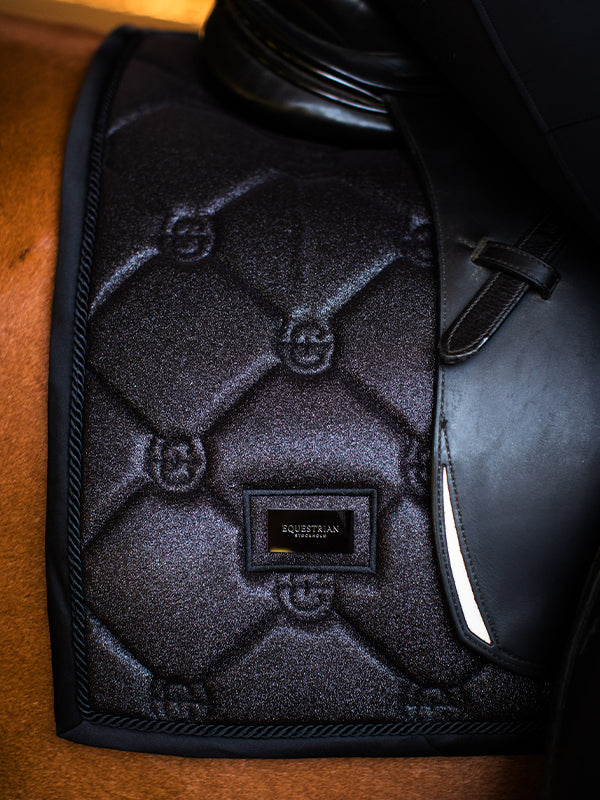
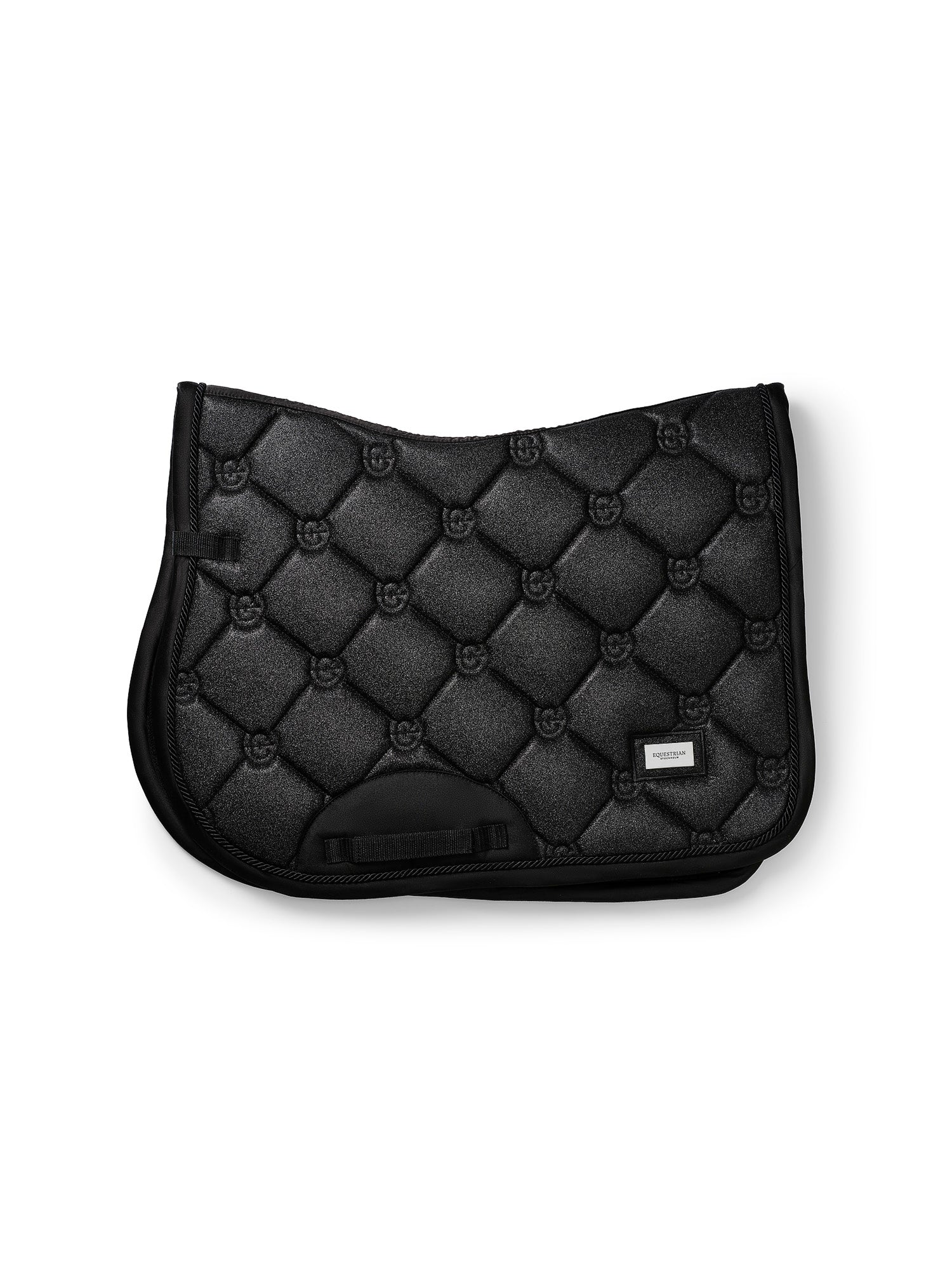
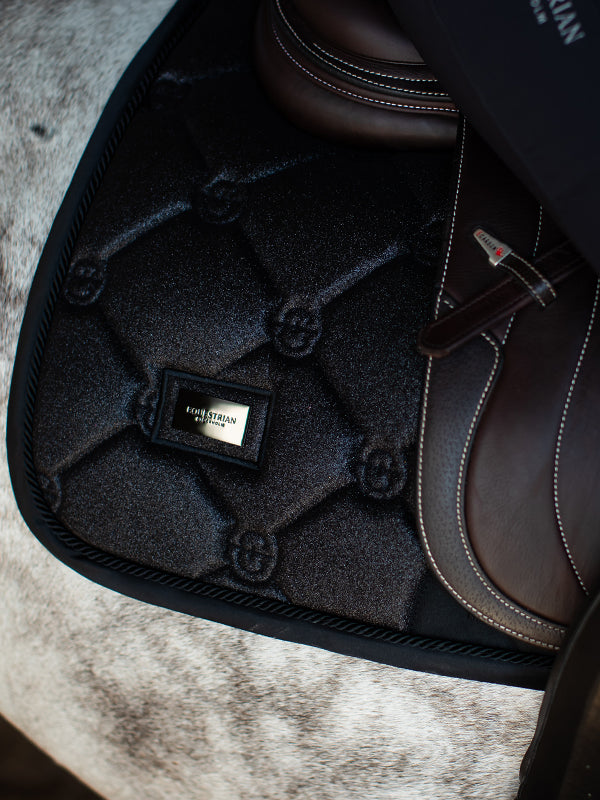
Saddle pads should fit the horse and saddle correctly, allow sufficient clearance, and help maintain comfort during riding.
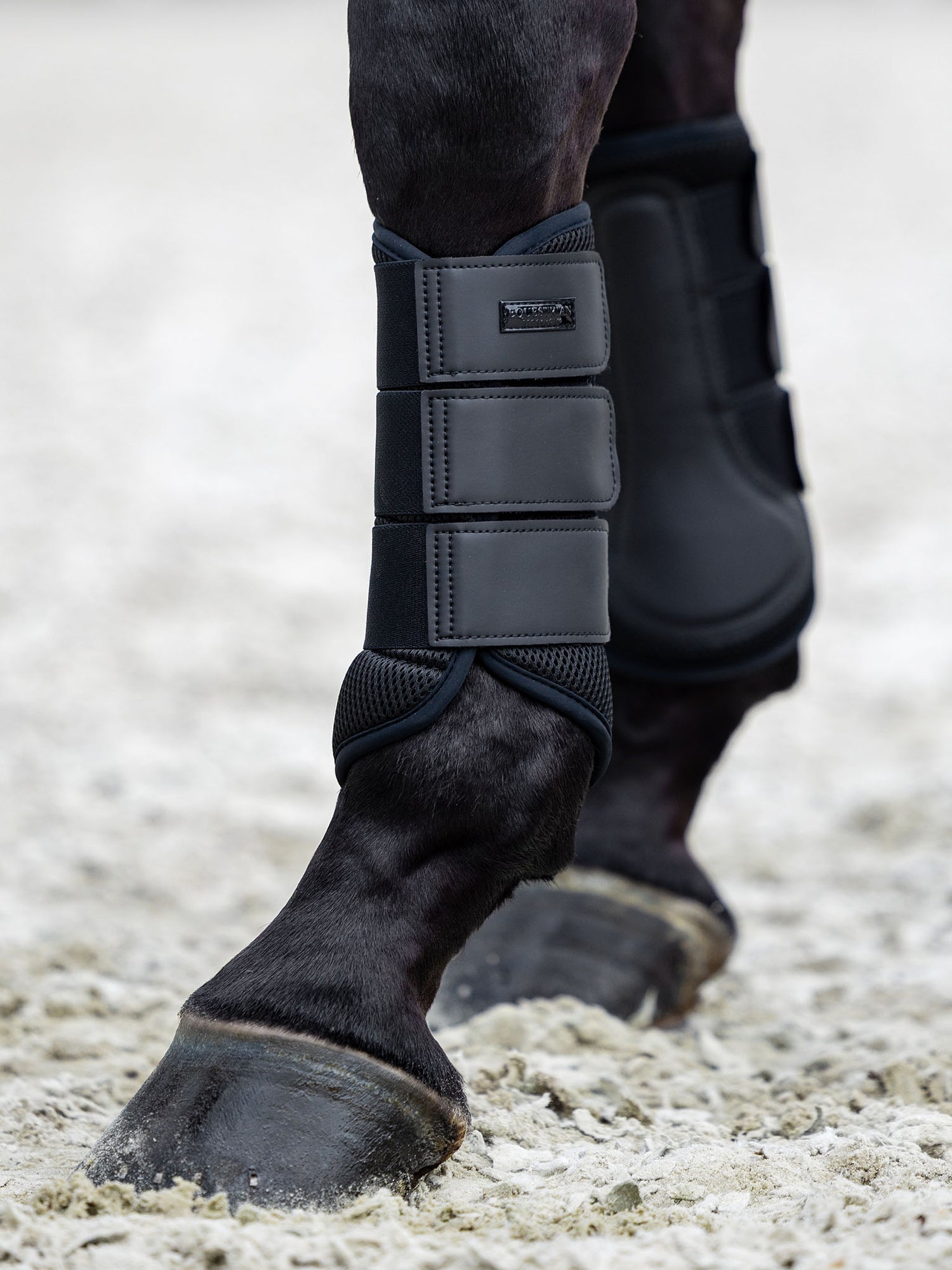
Protective boots should also be selected according to the horse's needs, discipline, and correct sizing.
What Colors Look Best on a Pinto Horse?
With their distinctive combination of white and darker coat colors, Pinto horses offer wonderful opportunities for creating elegant and coordinated equestrian outfits.
At Equestrian Stockholm, we love choosing saddle pads and matching accessories that complement a horse's natural coloring.
The best color depends on the Pinto's base coat, the amount of white in its markings, and the look you want to achieve.
Best Colors for a Black and White Pinto Horse
Black and white Pinto horses look beautiful in both bold and classic shades.
Our favorite choices include:
- Emerald Green: Creates an elegant contrast against black and white markings.
- Turquoise: Adds a fresh, vibrant touch.
- Deep Purple: Creates a sophisticated and luxurious appearance.
- Dusty Pink: Softens the strong contrast of the coat.
- Navy Blue: Offers a timeless, understated look.
Explore our Saddle Pads by Color to find a style that complements your horse.
Best Colors for a Chestnut and White Pinto Horse
Chestnut Pintos have warm reddish tones that pair beautifully with cooler colors.
We especially recommend dusty blue, navy, sage green, and lavender.
These shades create balance while allowing the horse's natural coloring to stand out.
Discover our Dressage Saddle Pads for elegant color combinations.
Best Colors for a Bay or Brown Pinto Horse
Bay and brown Pinto horses often look particularly beautiful in rich, elegant shades.
Forest green, midnight blue, muted pink, and soft gray can complement the warm tones of their coats.
For jumping, explore our Jumping Saddle Pads and create a coordinated look with matching accessories.
Complete the Look With Matching Horse Accessories
A beautifully coordinated equestrian outfit goes beyond the saddle pad.
Matching ear bonnets and horse boots can create a polished look for everyday training, photoshoots, or competitions where permitted by the relevant rules.
Discover our collections of Ear Bonnets and Horse Boots to complete your horse's outfit.
Frequently Asked Questions About Pinto Horses
Is a Pinto horse a breed?
No. Pinto primarily describes a white-spotted coat pattern rather than a single horse breed. Pinto coloring can occur in several different breeds.
What is the difference between a Pinto and a Paint horse?
Pinto refers to a coat pattern, while the American Paint Horse is a registered breed with specific pedigree requirements. Many Paint Horses have Pinto markings, but not every Pinto qualifies as an American Paint Horse.
What colors can Pinto horses be?
Pinto horses can have white patches combined with black, bay, chestnut, brown, and other base coat colors. The appearance depends on the horse's underlying coat color and white-spotting genetics.
Are Pinto horses rare?
Pinto coloring is found in multiple horse breeds and is not universally rare. However, the frequency of particular patterns and color combinations varies between breeds and populations.
Are Pinto horses good for beginners?
A Pinto horse can be suitable for a beginner, but coat color does not determine temperament. The horse's training, experience, personality, and suitability for the rider are far more important.
Can Pinto horses have blue eyes?
Yes. Some Pinto horses have one or two blue eyes, particularly in association with certain white-spotting patterns. However, many Pinto horses have brown eyes.
How tall is a Pinto horse?
There is no single standard height for all Pinto horses because Pinto describes coloring rather than one specific breed. Pinto-patterned equines range from small ponies to full-sized horses.
What is a black and white Pinto horse called?
A black and white Pinto horse is commonly called a piebald horse, particularly in British English.
What is a brown and white Pinto horse called?
In British equestrian terminology, a Pinto with white markings and a non-black base color is generally called a skewbald horse.
How long do Pinto horses live?
Pinto horses do not have a single lifespan associated with their coat pattern. Lifespan depends on breed, genetics, health, management, and other individual factors. Many well-cared-for horses live into their twenties, and some live longer.
What is the best saddle pad color for a Pinto horse?
The best saddle pad color depends on the horse's base coat and your personal style. Black and white Pintos often look stunning in emerald green, turquoise, and purple, while chestnut and bay Pintos can look beautiful in navy, sage green, and dusty blue.
Celebrate Your Pinto Horse's Unique Colors
Every Pinto horse is unique. From dramatic Tobiano markings to intricate Overo patterns, their distinctive coats make them some of the most eye-catching horses in the equestrian world.
Understanding Pinto horse colors, genetics, and characteristics helps riders appreciate these remarkable animals beyond their beautiful appearance.
And when it comes to styling, the possibilities are endless.
At Equestrian Stockholm, we believe that the right combination of colors can highlight your horse's natural beauty while creating a timeless and elegant equestrian look.
Explore our Saddle Pads and discover your perfect color combination.